Australians fly further to reach the Masai Mara than almost anyone else, and the peak migration months fall in the Australian winter — within reach of a mid-year school break, depending on your own state’s term dates. This page is about making that trip worth the twenty hours — booked direct with the Nairobi operator that runs it.
Every itinerary quoted individually in Australian dollars
✓ Nairobi-based owner-operator ✓ Private vehicle and guide, never a coach ✓ Support on the ground while you travel ✓ No booking fee to request a quote
What Australians should know before booking
The timing works in your favour
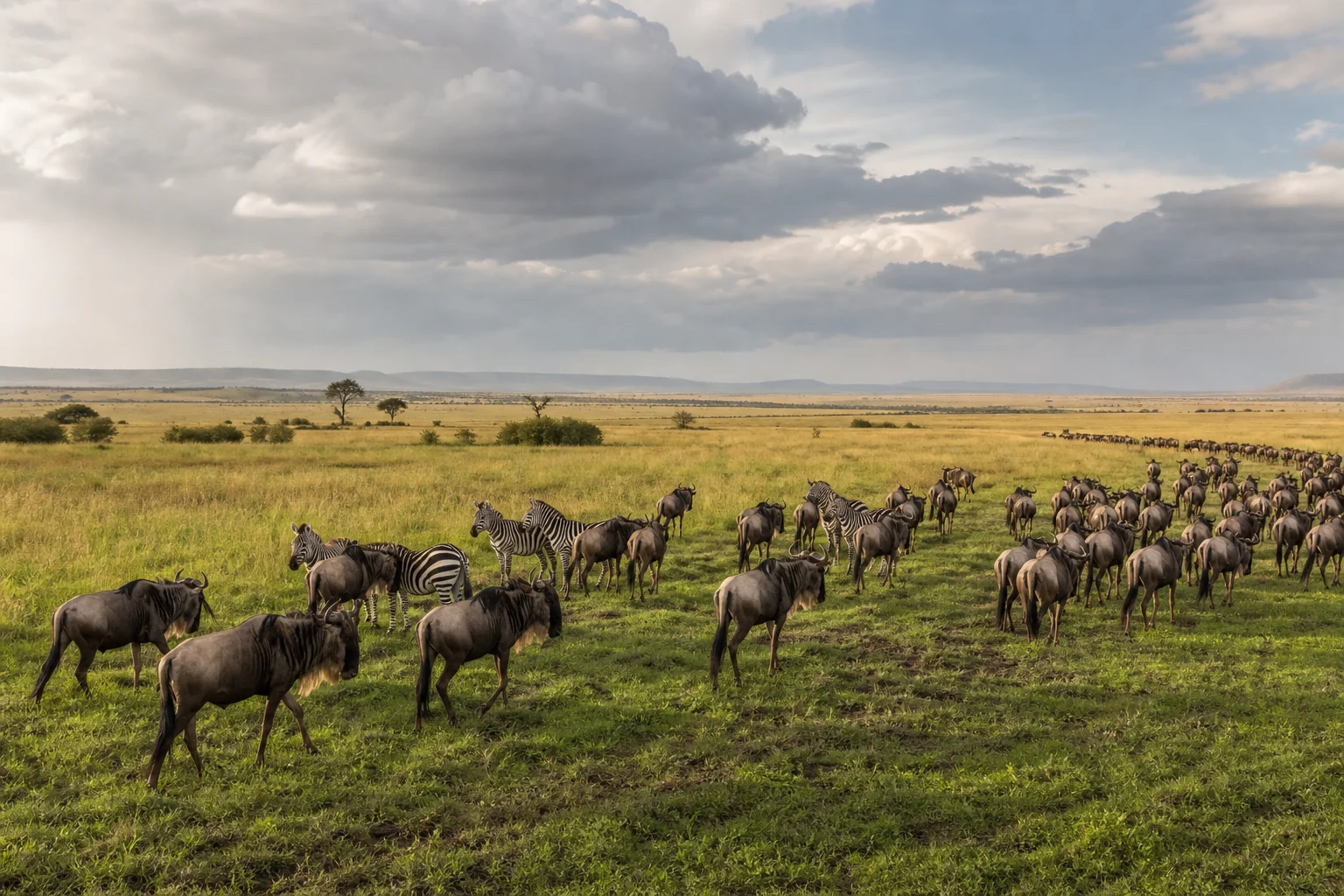
The Great Migration peaks in the Masai Mara from July to October, which falls in the Australian winter. The mid-year school break can sit inside that window, but it is a short break and term dates are set separately by each state and territory, so the overlap is not the same for every family — check your own state’s calendar, or send us your dates and we will work back from them. Northern-hemisphere leave and the wildlife calendar do not always line up; for Australia the season at least works with you rather than against you.
You are buying from the operator
Australian safari products are typically assembled here and delivered by a Nairobi ground operator. We are that operator, so there is no margin stacked on top and no message relay between you and the person who will actually be driving your vehicle.
Book earlier than feels necessary
The camps that matter in the Mara and northern Serengeti for July to October are contracted six to nine months out, and the good ones are small. Australians often start planning later than European travellers and find the best properties already gone.
Making one very long flight count
Twenty hours in the air changes the arithmetic of a safari. We would rather have an honest conversation about trip length up front than deliver a rushed itinerary you flew across the Indian Ocean for.
Ten days is the floor
Mara, Serengeti and Ngorongoro in ten days works, and it is the route this page is built around. Below that you are spending your holiday in transit between parks rather than watching animals.
Twelve to fourteen is the sweet spot
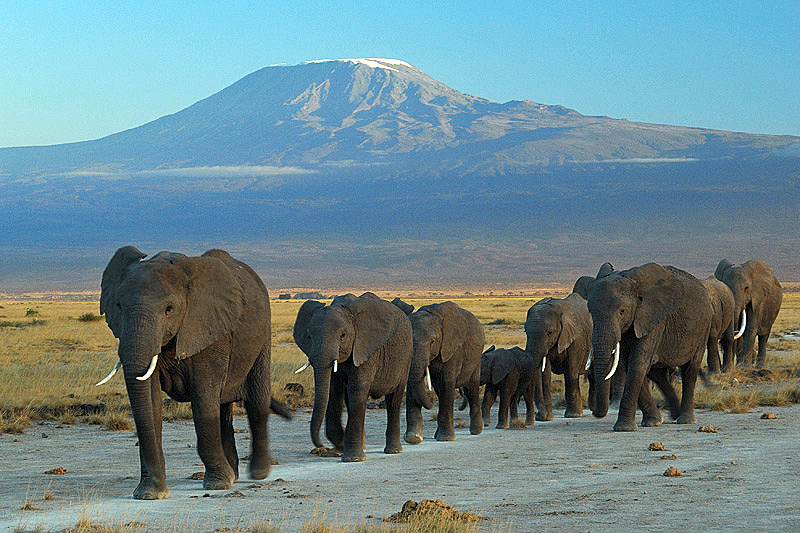
The extra days buy you a conservancy where night drives and walking are permitted, or Amboseli with Kilimanjaro behind the elephants, or simply two nights in each camp instead of one, which is the single biggest quality upgrade available.
Then finish flat
Zanzibar or Diani after the safari is the classic Australian pattern: game drives while you are fresh, then a beach to absorb the time difference before the flight home. The internal connection is short.
Getting to Nairobi from Australia
There are no direct flights between Australia and Nairobi. Every routing connects once, most often through a Gulf hub, then takes a short leg down to Nairobi, which is the gateway for both the Kenyan and Tanzanian halves of the trip.
Typical one-stop connections — verify live schedules with the carrier
Departing from
Usual routing
Carriers commonly used
Sydney (SYD)
Via Doha, Dubai or Abu Dhabi
Qatar Airways, Emirates, Etihad
Melbourne (MEL)
Via Doha or Dubai
Confirm current carriers when you book
Brisbane (BNE)
Via Doha or Dubai
Confirm current carriers when you book
Perth (PER)
Via Doha, or south via Johannesburg
Confirm current carriers when you book
On the southern routing, Qantas flies Perth–Johannesburg non-stop three times a week with an Airbus A330, a service it launched on 7 December 2025 (Government of Western Australia).
The table shows the connecting patterns Australians usually end up on, not a live schedule: airlines, routings and frequencies change seasonally, and a routing listed here may not be operating on your dates. Verify current carriers, schedules and fares with your chosen carrier or agent before booking anything. International airfares are not included in the land-package price.
Best time to go, planned around the Australian calendar
July–October — peak migration, Aussie winter
The Mara River crossings at their most dramatic, in the Australian winter. Whether that reaches your mid-year school break depends on your own state’s term dates, so check them before you fix anything. This is high season in the Mara, so book six to nine months ahead if you want the river-frontage camps.
December–January — summer holidays
Green season. Calving is starting in the southern Serengeti, the landscapes are lush rather than dusty, and there are far fewer vehicles at a sighting. Good value and good for families.
February and June — the shoulder
If your dates are flexible, these are the months we push. Strong wildlife viewing, better lodge availability, and none of the school-holiday premium.
The time difference, precisely
Nairobi is UTC+3 all year and does not change clocks. That is seven hours behind eastern Australia in winter, eight in summer during daylight saving, and five hours behind Perth. Send an enquiry in your morning and the reply is usually waiting the next day.
What a safari costs from Australia
Nature Point Africa is enquiry-based: every safari is quoted individually once we know your dates, party size and lodge tier, because those three things move the number more than anything on a rate card would suggest. The trips below are the shapes this page is built around for Australian travellers.
Safari shapes for Australian travellers
Package
Duration
Pricing
Kenya & Tanzania Big Five Safari
10 days
On request
Safari + Zanzibar Beach
14 days
On request
Premium Signature Safari
12 days
On request
Kilimanjaro Trek + Safari combo
Trek plus safari
On request
What is in every quote
Accommodation, all park and conservancy fees, daily game drives in a private 4×4, meals on safari, all ground transfers and an expert driver-guide. Not included: international airfares, the Kenya eTA and Tanzania e-visa, travel insurance, gratuities and personal spending.
Tailor-made, because twenty hours deserves better than a package
Nothing we sell is a scheduled group departure. Every Australian booking gets a private 4×4, one driver-guide for the whole route, and an itinerary written against your leave rather than against a brochure. The frame this page is built around, and the one that suits a long-haul Australian trip, is the 10-day Kenya and Tanzania adventure; from there we add nights, swap a park — the Ngorongoro Crater for Tarangire, say — or lift the camp tier, without re-quoting the trip from scratch.
The change worth asking for on a trip this long is two nights in each camp instead of one. It costs less than adding another park and it improves the trip more, because you stop packing every morning. Ask for it in the enquiry rather than after the quote arrives.
Kenya safari and Zanzibar beach package
Flying from Australia makes a beach extension close to free in effort terms. You are already on the far side of the Indian Ocean and the internal hop to the island is short. The 14-day Kenya, Tanzania and Zanzibar getaway is the version this page is built around: the wildlife route first, then nights on the coast to absorb the time difference before the flight home.
If the Tanzanian island does not fit your dates, the 10-day Kenya safari with a beach extension keeps the whole trip inside one country and removes a set of entry paperwork. Confirm current requirements for whichever version you choose before you book flights.
Honeymoon safaris in Africa, from Australia
A honeymoon that opens with twenty hours in the air makes the argument for spending on the camp rather than on the number of parks stronger than it would be on a shorter trip. Fewer moves, better properties, a vehicle that is only yours. The 11-day Kenya safari and Zanzibar honeymoon combo is built that way from the start.
Timing deserves a thought as well. The mid-year winter months are spectacular and crowded; February sits inside the calving season and is quieter. Our guide to the Great Migration in Kenya sets out what each month actually delivers.
Make the long journey visually worthwhile
Australians spend too long getting to East Africa for a rushed circuit. A better route combines a small number of contrasting landscapes and gives each one enough time. These are the three visual anchors we use most often when shaping the trip.
Amboseli pairs elephant viewing with a dramatic Kilimanjaro backdrop.The Masai Mara delivers the classic open-plains safari experience.The Serengeti earns the border crossing when migration timing is a priority.
Australian traveller FAQs
How do I fly from Australia to Nairobi?
There is no scheduled nonstop service between Australia and Nairobi, so Australians normally connect once, most often through a Gulf hub such as Doha, Dubai or Abu Dhabi from Sydney, Melbourne, Brisbane and Perth. Airlines, routings and frequencies change seasonally, so please verify current carriers and schedules at the time of booking. We meet you at Nairobi on arrival.
Do Australians need a visa for a Kenya safari?
Australian passport holders need a Kenya Electronic Travel Authorisation, applied for online before arrival. The Tanzanian leg covering the Serengeti and Ngorongoro requires a separate Tanzania e-visa or visa on arrival. We send every Australian guest a current checklist once the safari is confirmed. Please verify fees and processing times on the official Kenyan and Tanzanian government portals before you travel.
How long should an Australian spend on safari?
Long enough to be worth the flying time, and from Australia that is a lot of flying. A ten-day Kenya and Tanzania route is the practical minimum for seeing the Mara, the Serengeti and the crater properly. If your leave allows twelve to fourteen days, adding Amboseli, a conservancy or a Zanzibar or Diani beach finish makes the flying arithmetic considerably better. We would rather talk you into more days than sell you a rushed trip you flew twenty hours for.
What is the best time for an Australian to go on a Kenya safari?
July to October is peak Great Migration season in the Masai Mara and falls in the Australian winter. The mid-year school break can reach into that window, but it is a short break and term dates are set separately by each state and territory, so how much of the migration season it actually catches depends on where you live — tell us your dates rather than assuming a national one. It is high season in the Mara either way, and we suggest booking six to nine months ahead. The December and January summer holidays fall in the green season, with calving in the southern Serengeti, newborn wildlife and noticeably fewer vehicles. February and June are the value shoulder months.
How does the time difference work between Australia and Kenya?
Nairobi is on UTC+3 all year and does not change clocks. That makes it seven hours behind eastern Australia in winter and eight in summer when daylight saving is in effect, and five hours behind Perth. In practice a message sent in your morning reaches us overnight and is normally answered before your next working day starts.
Can you cater for families and honeymoons?
Yes. For families we plan around family tents and interconnecting rooms, flexible game-drive timing for younger children, and lodges chosen for space rather than just for view. For honeymooners we use private vehicles, quieter camps and bush dinners, and we can finish on the coast. Tell us in the enquiry form and the itinerary is built around it from the start.
Get your free, no-obligation quote
Tell us a little about your trip and a Nairobi-based specialist will reply within one business day. Prefer to talk now? Message us on WhatsApp or call +254 769 406 388.