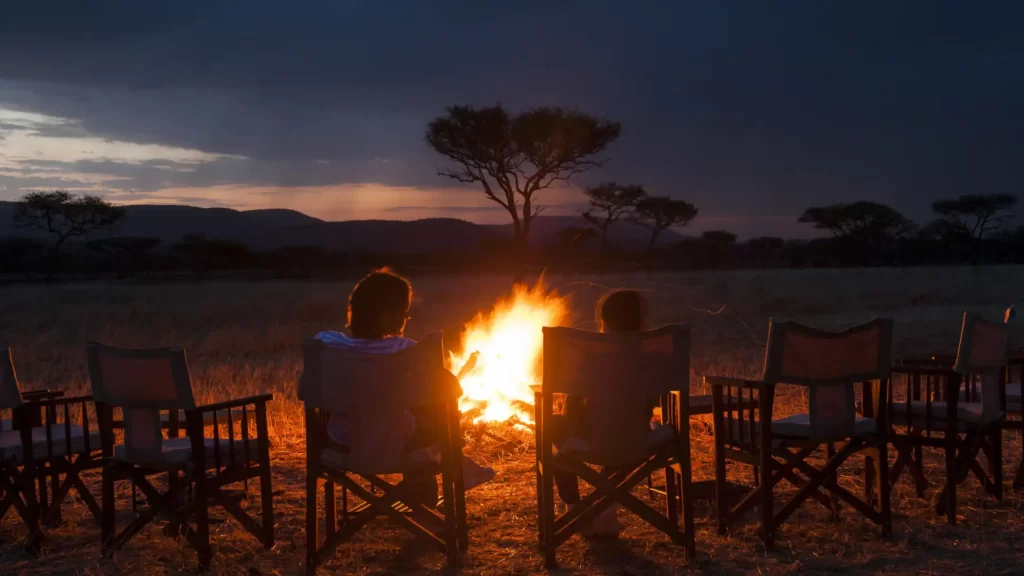

A Kenya safari commonly costs about US$150 to US$1,000 or more per person per day. The useful answer, however, depends on your travel dates, group size, parks, accommodation and whether you choose a private or shared vehicle. A comfortable private mid-range safari often falls around US$300–US$600 per person per day, while fly-in and high-end stays can cost considerably more.
This guide explains the main cost levels without pretending there is one universal price. Use it to build a realistic budget, then ask for an itemised quote based on your preferred route. If you already know your dates, explore our Kenya safaris or contact our local trip planners for a tailored estimate.
Still deciding how long to travel? Compare realistic 7-, 10-, 12- and 14-day Kenya and Tanzania safari routes before finalising your budget.
Kenya safari cost at a glance
| Travel style | Typical daily range | What to expect |
|---|---|---|
| Budget or shared safari | US$150–US$300 per person | Simple camps or lodges, shared transport, set departure dates and fewer private choices |
| Mid-range private safari | US$300–US$600 per person | Comfortable en-suite stays, private vehicle and guide, meals and a more flexible itinerary |
| Luxury safari | US$600–US$1,000+ per person | Premium camps, exceptional locations, highly personalised service and sometimes internal flights |
These are planning ranges rather than fixed tariffs. A short private trip for two people usually has a higher per-person cost than the same route shared by four or six travellers because the vehicle and guide cost is divided among fewer guests.
What determines the price of a Kenya safari?
1. Travel season
July to October and the festive period are usually the most expensive times in popular wildlife areas. Demand rises around the Great Migration in the Masai Mara, and the best-positioned camps can sell out early. Green-season travel can offer lower accommodation rates, fewer vehicles and attractive landscapes. Read our month-by-month Kenya guide before deciding that peak season is your only option.
2. Accommodation level and location
A simple lodge outside a reserve costs less than an intimate camp in a prime wildlife area. Price differences may reflect location, room design, exclusivity, service level and included activities—not just whether a property calls itself “luxury.” Staying close to the area you want to explore may cost more per night but can reduce transfer time and give you more useful hours on safari.
3. Private versus shared transport
A private safari vehicle gives your group control over daily pacing, photography stops and departure times. A shared departure lowers the per-person cost but follows a more fixed plan. For families, friends or two couples travelling together, a private vehicle can offer surprisingly good value once its cost is divided across the group.
4. Driving versus flying
Driving between Nairobi, Amboseli, Lake Naivasha, Lake Nakuru and the Masai Mara can be part of the adventure and usually costs less than flying. Scheduled light-aircraft services save time but add fares, transfers and luggage restrictions. A mixed itinerary—driving one direction and flying the other—can balance time and budget.
5. Parks, conservancies and activities
Park and conservancy fees vary by destination and season and can form a significant part of the total. Balloon flights, private bush meals, walking safaris, night drives and cultural visits may be optional extras. Ask whether every planned activity and fee is included in the quotation.
What should a Kenya safari package include?
A well-presented safari quote should clearly identify:
- Accommodation and the exact room or tent category
- Meals and drinking water
- Airport or hotel transfers
- Safari vehicle and professional driver-guide
- Park and conservancy entry fees
- Game drives and specifically listed activities
- Domestic flights, if part of the itinerary
- Taxes and any known compulsory charges
International flights, travel insurance, visas or electronic travel authorisations, gratuities, premium drinks and optional activities are commonly excluded. The lowest headline price is not necessarily the lowest final price, so compare quotes line by line.
Sample budgets for common Kenya itineraries
Three-day Masai Mara safari
A short road safari is often the lowest-cost way to experience the Mara, especially on a shared departure. It is also a fast itinerary: road transfers take a meaningful portion of the first and last days. If time allows, an extra night creates a less rushed wildlife experience.
Seven-day classic Kenya safari
A week can combine two or three contrasting areas such as Amboseli, Lake Naivasha or Lake Nakuru and the Masai Mara. It generally provides better value than repeatedly adding one-night stops because the route uses fewer long transfers and gives you complete wildlife-viewing days.
Ten-day safari and beach holiday
Combining a safari with Diani Beach gives you active wildlife days followed by time to rest on the coast. The final cost depends heavily on whether you fly or take the train and road transfers. See our 10-day Kenya safari and beach extension for route inspiration.
How to reduce your Kenya safari cost without spoiling the trip
- Travel outside the busiest weeks. Shoulder and green seasons can deliver excellent wildlife and better lodge availability.
- Stay longer in fewer places. This cuts transfer costs and creates more meaningful time in each ecosystem.
- Share the vehicle. A small group can reduce the per-person cost substantially.
- Use road transfers strategically. Fly only where the saved time materially improves the itinerary.
- Choose the right park, not only the famous park. Amboseli, Samburu, Tsavo, Meru and conservancy areas offer distinctive experiences.
- Request an itemised quote. Confirm fees, meals, transfers and exclusions before comparing totals.
Frequently asked questions
How much is a seven-day Kenya safari?
A seven-day trip can range from a budget shared departure to a premium fly-in itinerary. For initial planning, multiply the appropriate daily range above by seven, then confirm the exact parks, season, accommodation and inclusions with an operator.
Is a private Kenya safari worth it?
It is often worth the difference for couples, families and photographers who value flexible stops and a personalised pace. For a larger group, the per-person difference between private and shared travel may be smaller than expected.
Are park fees included in safari prices?
They are included in many full packages, but not every advertised price. Ask for written confirmation because fees and seasonal rules can change.
When is a Kenya safari cheapest?
Lower-demand rainy or shoulder periods generally offer the best accommodation value. Conditions vary by region, so choose dates around the wildlife and activities that matter to you rather than price alone.
Get an accurate Kenya safari quote
The most reliable safari price is built around your dates, group size, room preferences and must-see destinations. Browse our East Africa safari tours, then send us your trip ideas. Nature Point Africa will explain the inclusions and adjust the itinerary to the experience and budget you have in mind.