
The best places to visit in Kenya combine world-class safari parks like the Masai Mara and Amboseli, the white-sand beaches of Diani, and the Rift Valley lakes — all reachable within a single two-week trip. Kenya packs the Great Migration, the Big Five, snow-capped Mount Kenya and the Indian Ocean into one country, which is exactly why it remains East Africa’s most complete safari-and-beach destination.
This guide walks through the twelve destinations we send travellers to most often, what each is best for, and how to string them together. For a tailor-made route, browse our Kenya safaris or see the full range of safari packages and tours.
Best places to visit in Kenya at a glance
| Destination | Best for | Ideal time to visit |
|---|---|---|
| Masai Mara | Great Migration, big cats, Big Five | July–October |
| Amboseli | Elephant herds & Mount Kilimanjaro views | June–October, January–February |
| Samburu | Rare northern species, fewer crowds | June–October |
| Lake Nakuru | Rhinos & flamingos, easy to reach | Year-round |
| Tsavo East & West | Vast wilderness, “red” elephants | June–October |
| Diani Beach | Beach relaxation after safari | December–March, July–October |
| Lake Naivasha | Boat safaris & walking with wildlife | Year-round |
| Ol Pejeta & Lewa | Rhino conservation, exclusive game viewing | Year-round |
| Nairobi | City culture & a park on its doorstep | Year-round |
| Mount Kenya | Trekking & alpine scenery | January–February, August–September |
Below, each destination in detail — what makes it special, the wildlife or experiences to expect, and who it suits best.
1. Masai Mara National Reserve
The Masai Mara National Reserve is the destination most travellers picture when they think of Kenya. Rolling grasslands stretch to the horizon, dotted with acacia trees and some of the highest densities of lion, cheetah and leopard anywhere in Africa. It is the northern extension of the Serengeti ecosystem, and from roughly July to October it hosts the Great Migration — more than a million wildebeest and zebra crossing the crocodile-filled Mara River.
Even outside migration season, the Mara delivers the Big Five and superb year-round predator sightings. Add a dawn hot-air balloon flight and a visit to a Maasai village and it is easy to see why the Mara anchors almost every first Kenyan safari.
Best for: first-time safari-goers, the Great Migration, big-cat photography.
2. Amboseli National Park
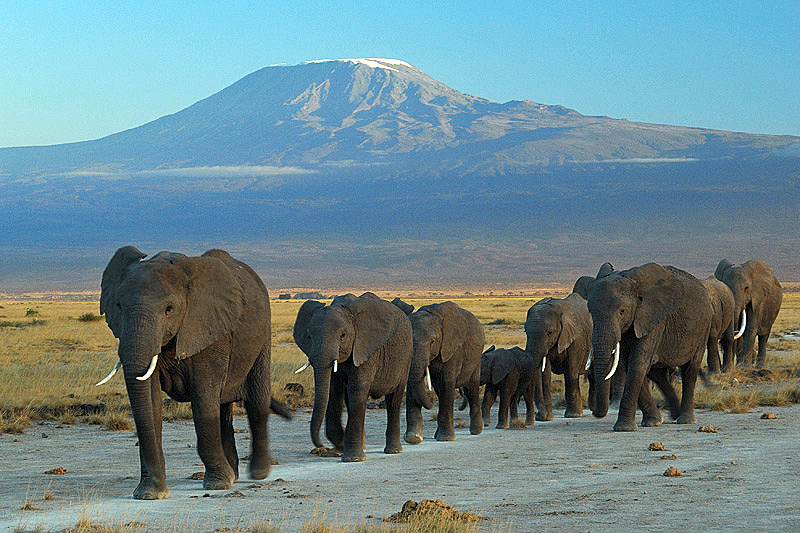
Amboseli National Park offers the most iconic image in African travel: great herds of elephants crossing open plains with snow-capped Mount Kilimanjaro rising behind them. The park’s swamps, fed by underground streams from Kilimanjaro, draw wildlife even in the dry season, making elephant sightings almost guaranteed.
Amboseli is compact and easy to combine with the Mara or Tsavo, and its flat, open terrain makes for excellent photography and unobstructed views. Clear mornings between June and October, and again in January and February, give the best chance of seeing the mountain unveiled.
Best for: elephant encounters, Kilimanjaro backdrops, photographers.
3. Samburu National Reserve
North of Mount Kenya, Samburu National Reserve feels wilder and far less crowded than the southern parks. It is home to the “Samburu Special Five” — the reticulated giraffe, Grevy’s zebra, Somali ostrich, gerenuk and beisa oryx — species you will not easily find elsewhere in Kenya. The Ewaso Nyiro River draws elephants, leopards and crocodiles to its banks.
Samburu also offers a rich cultural experience with the Samburu people, close cousins of the Maasai. It pairs beautifully with the conservancies of Laikipia for a quieter, more exclusive northern-Kenya safari.
Best for: unique wildlife, off-the-beaten-path safaris, culture.
4. Lake Nakuru National Park
Lake Nakuru National Park is one of Kenya’s most rewarding short safaris. The alkaline lake is famous for the flamingos that gather along its shores, while the fenced sanctuary around it protects both black and white rhino — giving you an excellent chance of seeing rhino alongside lion, leopard and the endangered Rothschild’s giraffe.
Just a few hours from Nairobi, Nakuru is often combined with the Mara or Lake Naivasha on a classic Rift Valley loop. Its compact size means a lot of wildlife in a small, accessible area.
Best for: rhino sightings, birdlife, short Rift Valley trips.
5. Tsavo East & Tsavo West National Parks
Together, Tsavo East and Tsavo West form one of the largest protected wildernesses on earth. Tsavo East is known for its vast open spaces and dust-red elephants, coloured by the region’s ochre soil, while Tsavo West is more scenic, with volcanic hills, the crystal-clear Mzima Springs and its rhino sanctuary.
Lying between Nairobi and the coast, the Tsavo parks are the natural bridge on a safari-and-beach itinerary, letting you break the journey to Diani or Mombasa with genuine big-game country.
Best for: wild, uncrowded landscapes, safari-and-beach routes.
6. Diani Beach & the Kenyan Coast
After days on the plains, Diani Beach is where most travellers unwind. Powder-white sand, warm turquoise water and a protective coral reef make this stretch south of Mombasa one of the finest beaches in Africa. Snorkelling, diving, kitesurfing and dhow cruises fill the days; fresh Swahili seafood fills the evenings.
A few days on the coast is the perfect close to a Kenyan safari, and the short flight from Nairobi or Mombasa makes the combination effortless. See how we blend the two on our safari and beach packages.
Best for: post-safari relaxation, watersports, honeymoons.
7. Lake Naivasha
A freshwater lake in the heart of the Rift Valley, Lake Naivasha is a relaxed, scenic stop just two hours from Nairobi. Boat safaris bring you close to hippos and more than 400 bird species, while nearby Crescent Island offers one of the few places in Kenya where you can walk among giraffe, zebra and antelope on foot.
Naivasha also serves as the gateway to Hell’s Gate National Park, where you can cycle and hike among wildlife, and it pairs naturally with Lake Nakuru on a Rift Valley itinerary.
Best for: boat safaris, walking safaris, easy trips from Nairobi.
8. Ol Pejeta & Lewa Conservancies
For conservation-focused travel, the private conservancies of Laikipia are hard to beat. Ol Pejeta Conservancy is home to the last two northern white rhinos on the planet and a chimpanzee sanctuary, while Lewa Wildlife Conservancy is a UNESCO World Heritage Site and a flagship for rhino protection.
Conservancies allow activities the national parks do not — night drives, guided walks and off-road tracking — with far fewer vehicles around each sighting. They are ideal for travellers who want an exclusive, meaningful safari.
Best for: rhino conservation, exclusive game viewing, night & walking safaris.
9. Nairobi
Most journeys begin in Nairobi, and the capital is worth a day in its own right. It is the only city on earth with a national park on its doorstep — lions and rhinos roam within sight of the skyline. Add the David Sheldrick Elephant Orphanage, the Giraffe Centre and the Karen Blixen Museum for a rewarding pre- or post-safari day.
Best for: arrival days, wildlife experiences close to the city, culture.
10. Mount Kenya
Africa’s second-highest mountain, Mount Kenya, rewards trekkers with glacial tarns, alpine moorland and dramatic peaks. Point Lenana, the trekking summit, is achievable for fit walkers without technical climbing, making it a superb multi-day adventure. Prefer a bigger challenge? Many travellers combine Kenya with a climb of Mount Kilimanjaro across the border in Tanzania.
Best for: trekkers, adventure travellers, alpine scenery.
How many of these places can you visit in one trip?
A well-planned itinerary comfortably combines three to five of these destinations. A classic first visit pairs the Masai Mara, Lake Nakuru and Amboseli over 6–8 days; add Diani Beach for a safari-and-beach holiday, or Samburu and the Laikipia conservancies for a wilder, quieter route. Because Kenya’s parks are well connected by road and short flights, you rarely need to backtrack.
Our team builds every route around your interests, budget and travel dates. Start with our Kenya safari packages or contact us for a free tailor-made quote.
Best time to visit Kenya
Kenya is a year-round destination, but the dry seasons of June to October and January to February offer the easiest wildlife viewing, with animals concentrated around water and clear skies for photography. The Great Migration reaches the Masai Mara between July and October. The long rains (March to May) bring lush scenery, fewer crowds and lower rates, while the coast is warm and inviting for most of the year.
Frequently asked questions
What is the number one place to visit in Kenya?
The Masai Mara National Reserve is Kenya’s most popular destination, famous for the Great Migration and exceptional big-cat sightings. It is the top pick for most first-time visitors.
What is the best time to visit Kenya?
The best time is during the dry seasons, from June to October and January to February, when wildlife viewing is at its peak. July to October is ideal for witnessing the Great Migration in the Masai Mara.
Can you combine a safari and a beach holiday in Kenya?
Yes. Kenya is one of the best countries for a safari-and-beach trip. Travellers typically spend several days on safari in the Mara, Amboseli or Tsavo, then fly to Diani Beach or the Mombasa coast to relax by the Indian Ocean.
How many days do you need to visit Kenya?
A rewarding first trip usually takes 7 to 10 days, enough to combine two or three safari parks with time to travel between them. Adding a beach stay or northern destinations like Samburu extends this to around two weeks.
Is Kenya safe for tourists?
Kenya is a well-established safari destination that welcomes hundreds of thousands of visitors each year. Travelling with a reputable local operator, staying in recognised camps and lodges, and following your guide’s advice keeps a Kenyan safari safe and comfortable.
Plan your Kenya trip
From the Masai Mara’s big cats to Diani’s coral coast, Kenya offers more variety than almost anywhere in Africa. Nature Point Africa is a local, Kenya-based operator crafting tailor-made safaris with expert guides and honest pricing. Browse our Kenya safaris or get in touch to start planning your trip.