
Ready to cross the ultimate adventure off your bucket list? A Maasai Mara safari puts you in the middle of Africa’s greatest wildlife show. Expect lions on open plains, elephants beneath acacia trees and, from July to October, more than a million wildebeest pouring in from Tanzania.
This guide covers everything you need to plan your trip: the wildlife, the Great Migration, the best time to visit, 2026 park fees, how many days to stay and how to get there. You’ll also see the reserve spelled Masai Mara, and Kenyans simply call it “the Mara.”
Maasai Mara at a glance
| Location | Narok County, south-west Kenya, bordering Tanzania’s Serengeti |
| Size | 1,510 km² (the reserve alone; private conservancies add more) |
| From Nairobi | 5–6 hours by road, or under an hour by light aircraft |
| Best time | July–October for the Great Migration; June–October for dry-season game viewing |
| Big Five | All five, including a small black rhino population |
| Entry fee (non-resident adult) | US$100 (Jan–Jun) or US$200 (Jul–Dec) per day |
| Ideal stay | 3 nights; 4 or more if you want a river crossing |
Why a Maasai Mara safari belongs on your bucket list
The Mara is 1,510 km² of rolling grassland in south-west Kenya. It forms the northern end of the Serengeti–Mara ecosystem, so wildlife moves freely across the Tanzanian border. Its name comes from the Maa language, where “mara” means “spotted,” after the trees and shrubs dotting the plains.
Three things set it apart:
- Wildlife you can actually see. Short grass and open plains make animals easy to spot all year, not only during the migration.
- The Great Migration. The herds’ river crossings are among the most dramatic wildlife sights on Earth.
- A living culture. Maasai families still graze cattle around the reserve and welcome visitors into their homes.
Wildlife in the Maasai Mara
The Big Five
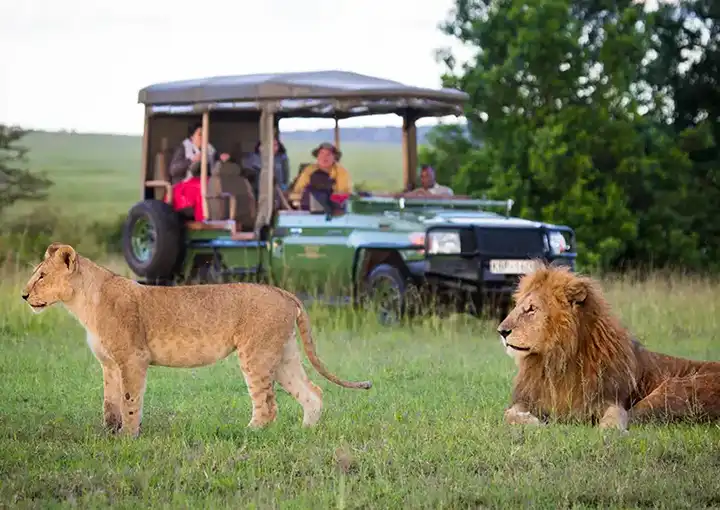
All of the Big Five live in the Mara: lion, leopard, elephant, Cape buffalo and black rhino. Lions are the headline act. The reserve is famous for its large prides and was the setting for the BBC’s Big Cat Diary.
Rhinos are the hardest to find. Only about 25–30 black rhinos live in the reserve, so a sighting is a real privilege.
Big cats, plains game and birds
Cheetahs hunt on the short-grass plains, and leopards rest in the forest along the Mara and Talek rivers. Hippos and Nile crocodiles crowd the Mara River. You’ll also see giraffes, zebras, topi, eland, gazelles, hyenas and jackals.
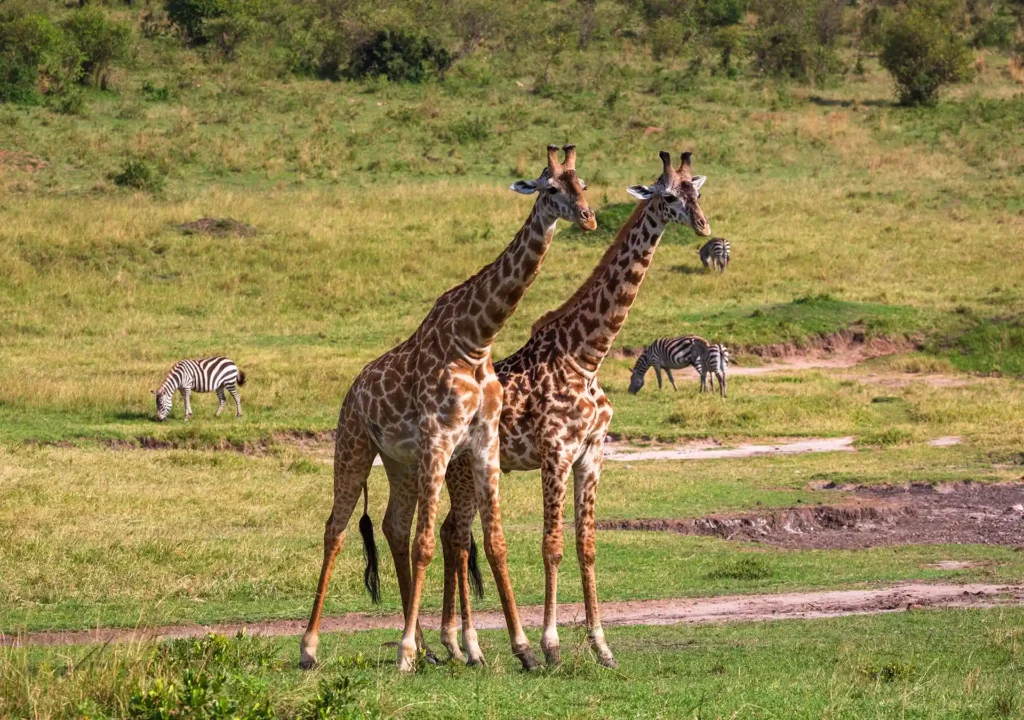
Birders can tick off more than 500 species, including about 60 birds of prey. Look out for secretary birds, martial eagles and lilac-breasted rollers.
The Great Migration in the Maasai Mara
Each year, about 1.3 million wildebeest, 200,000 zebras and hundreds of thousands of gazelles follow the rains. They loop between Tanzania’s Serengeti and Kenya’s Maasai Mara in search of fresh grass.
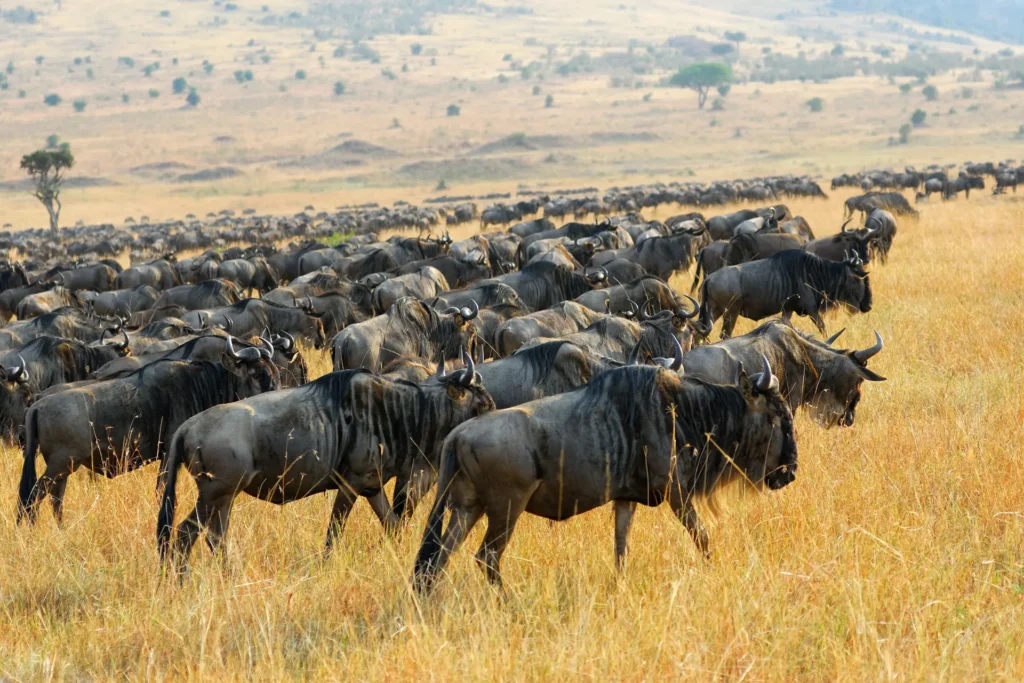
When does the Great Migration reach the Maasai Mara?
The herds usually cross into the Mara in July and head back south to the Serengeti around October. August and September are typically the busiest months for river crossings. The timing shifts with the rains each year, so no date is guaranteed.
For the rest of the year the herds are in Tanzania. Our guide to the best time to visit Tanzania for safari follows them month by month, and our guide to witnessing the Great Migration in Kenya has more viewing tips.
The Mara River crossings
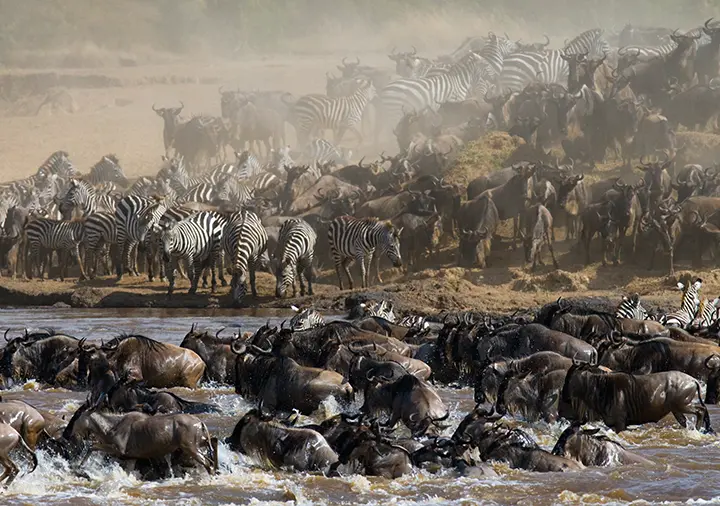
The crossings are the moment everyone hopes to see. Thousands of wildebeest gather on the bank, sometimes for hours, until one animal plunges in and the rest follow. Crocodiles wait in the water and lions wait on the far side.
Patience pays. A good guide reads the herds and gets you to the right crossing point early. That’s where local knowledge matters, and it’s why we say we know the right places.
Best time to visit the Maasai Mara
The Mara is worth visiting all year, but each season offers something different.
| Months | Season | What to expect |
|---|---|---|
| January–March | Warm and mostly dry | Strong predator sightings, fewer vehicles and lower rates. The herds are calving in the southern Serengeti. |
| April–May | Long rains | Lush scenery and the lowest prices. Some roads get muddy and a few camps close. |
| June | Early dry season | Shorter grass and easier sightings. The herds often approach from the south, and low-season fees still apply. |
| July–October | Dry season and Great Migration | River crossings, peak wildlife and peak prices. Book 6–12 months ahead. |
| November–December | Short rains | Green plains, quieter roads and excellent resident wildlife. |
Our tip: For August and September, camps close to the Mara River fill first. Lock in your dates early.
Things to do on a Maasai Mara safari
- Game drives. Morning and afternoon drives are the heart of any safari. A full-day drive with a picnic lunch gets you to the river.
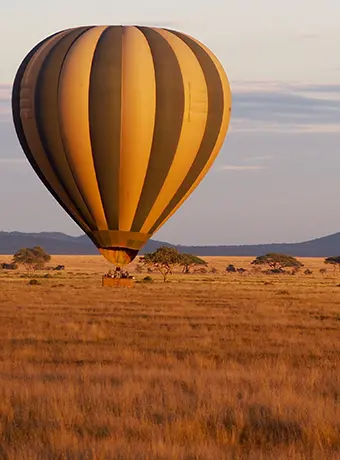
- Hot air balloon safari. Float over the plains at sunrise, then land for a champagne bush breakfast. Expect to pay about US$450–650 per person.
- Maasai village visit. Meet a Maasai family, see how a traditional home is built and watch the famous jumping dance.
- Walking safaris and night drives. These are offered mainly in the private conservancies around the reserve.
- Photography. Golden light, open plains and big cats make the Mara a favourite with wildlife photographers.
Maasai Mara National Reserve vs. private conservancies
The reserve is ringed by private conservancies, such as Mara North Conservancy, on land leased from Maasai landowners. They cap vehicle numbers, so you’ll share sightings with far fewer people.
Conservancy fees run about US$70–120 per person per night and are usually built into your camp rate. You pay the reserve fee on top on any day you drive into the main reserve.
Many travellers split their stay. They spend a few nights in a conservancy for privacy, plus a day in the main reserve for the river crossings.
How much does a Maasai Mara safari cost?
Your total depends on the season, your lodge and how you travel. As a guide, a Kenya safari costs about:
- Budget or shared safari: US$150–300 per person per day
- Mid-range private safari: US$300–600 per person per day
- Luxury safari: US$600–1,000 or more per person per day
In high season, the US$200 daily entry fee alone pushes Mara trips toward the top of each range.
Maasai Mara entry fees (2026)
| Visitor | January–June | July–December |
|---|---|---|
| Non-resident adult | US$100 | US$200 |
| Non-resident child (9–17) | US$50 | US$50 |
| Child under 8 | Free | Free |
Narok County sets these fees. Each ticket covers one day, from 6am to 6pm. Fees can change, so we confirm current rates when we quote your trip.
For a full breakdown, read how much a Kenya safari costs.
How many days do you need in the Maasai Mara?
- 2 nights: The minimum. You get about two days of game drives, but it feels rushed if you drive from Nairobi.
- 3 nights: The sweet spot for most travellers, with time for a balloon flight or village visit.
- 4 nights or more: Best during the migration, when you may wait at the river for a crossing.
Planning to add Amboseli, Lake Nakuru or the Serengeti? See how many days you need for a Kenya and Tanzania safari.
How to get to the Maasai Mara
- By road: About 5–6 hours from Nairobi in a 4×4 safari vehicle with a pop-up roof. You’ll stop at a Great Rift Valley viewpoint on the way.
- By air: Scheduled light-aircraft flights leave Nairobi’s Wilson Airport daily for airstrips in and around the reserve. The flight takes under an hour and suits short stays.
A popular option is to drive in via Lake Naivasha or Lake Nakuru and fly back to Nairobi.

Combine the Maasai Mara with the rest of East Africa
These Naturepoint Africa itineraries include the Mara:
- 6-Day Kenya’s Finest Luxury Safari: the Mara and Lewa Wildlife Conservancy
- 10 Days Kenya & Tanzania Adventure: Lake Nakuru, the Mara, the Serengeti, Ngorongoro and Amboseli
- 11 Days Kenya Safari & Zanzibar Honeymoon Combo: Ol Pejeta, Lake Naivasha, the Mara and Zanzibar’s beaches
- 14 Days Kenya, Tanzania & Zanzibar Getaway: the Mara, the Serengeti, Ngorongoro and Zanzibar
- 16 Days East Africa Wildlife and Primates Odyssey: the Mara, the Serengeti and gorilla trekking in Bwindi
What to pack for a Maasai Mara safari
Mornings can be as cold as 12°C and afternoons reach 30°C, so pack layers in neutral colours. Bring binoculars, a camera with a zoom lens, sunscreen and a wide-brimmed hat. Light aircraft have strict luggage limits, so use a soft-sided bag.
Our East Africa safari packing list covers the rest.
Plan your Maasai Mara safari with Naturepoint Africa
A Maasai Mara safari stays with you for life, from your first lion pride to the thunder of the herds at the river. Let Naturepoint Africa take you there, because we know the right places.
Our Nairobi-based team builds tailor-made safaris around your dates, budget and travel style.
- Call or WhatsApp: +254 769 406388
- Email: info@naturepointafrica.com
- Start planning your safari
Maasai Mara safari FAQs
What is the best time for a Maasai Mara safari?
July to October is the best time for the Great Migration and river crossings. June to October is the dry season, when short grass makes wildlife easy to spot. January to March offers great predator sightings, fewer crowds and lower park fees.
When can I see the Great Migration river crossings in the Maasai Mara?
The herds usually arrive in July and leave around October. River crossings are most frequent in August and September. The exact timing depends on the rains, so plan at least three or four nights to improve your chances.
How much is the Maasai Mara entry fee in 2026?
Non-resident adults pay US$100 per day from January to June and US$200 per day from July to December. Children aged 9–17 pay US$50 and children under 8 enter free. Narok County sets the fees, which can change.
How many days do I need in the Maasai Mara?
Three nights is ideal for most travellers. Two nights is the minimum. During the migration, stay four nights or more so you have time to wait at the Mara River for a crossing.
Can you see the Big Five in the Maasai Mara?
Yes. Lion, leopard, elephant and buffalo are seen often. Black rhinos are rare, with only about 25–30 in the reserve, so spotting all five takes some luck and an experienced guide.
Is it Maasai Mara or Masai Mara?
Both spellings are correct. “Maasai” matches the name of the Maasai people, while “Masai” is an older English spelling. Locals often just say “the Mara.”
Is the Maasai Mara better than the Serengeti?
They are two halves of one ecosystem. The Mara is smaller, closer to Nairobi and best from July to October. The Serengeti is far larger and hosts the herds for most of the year. Many travellers combine both on one trip.